Church of Saint Catherine
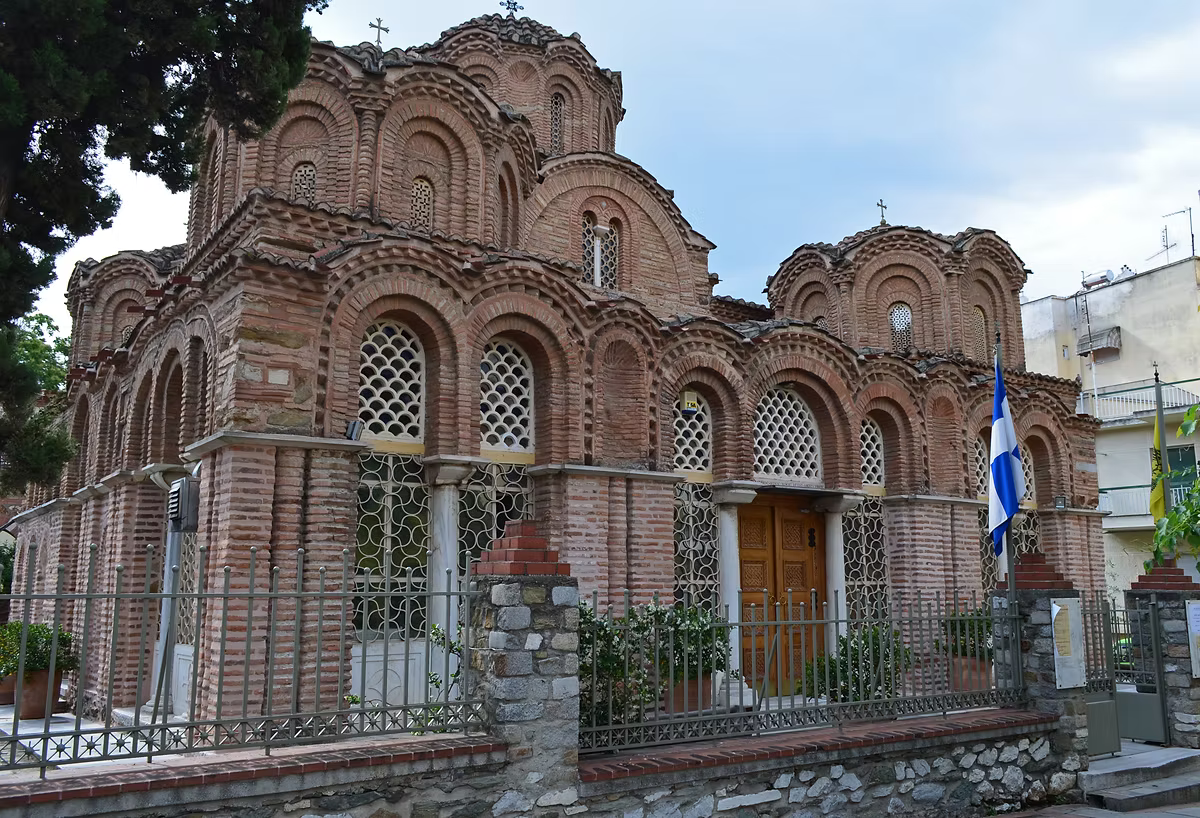
Architect: N/A
Material: N/A
Relative/Absolute Date: Late 13th century - Early 14th century
Culture: Late Byzantine
Scale:
Current Location: Thessaloniki, Macedonia, Greece
Situated in one of the more important cities within the Byzantine Empire, Thessaloniki holds both buildings from early Byzantine to late Byzantine design. The Church of Saint Catherine, or known as Ayia Ekaterini, stands as a testament to the latter, though not without difficulty in the charge of identifying any information at all. The origin of this church is indicative of many late Byzantine structures that are housed within Thessaloniki, in which information is constructed piecemeal from both Byzantine and Turkish sources and combined with archaelogical efforts (Kourkoutidou-Nikolaidou 1997, 118). What is known is that the Church originated from around late 13th to early 14th century in construction. Its layout is the cross-in-square architectural plan, known primarily for its usage in late Byzantine buildings (Kourkoutidou-Nikolaidou 1997, 118).
It appeared to have been intended for Christian worship as paintings dated around 1315, discovered during restoration work in the 1940's, were found depicting scenes of Communion and also of the icon of the Pantokrator (Kourkoutidou-Nikolaidou 1997, 119). During Ottoman reign from 1430 onwards, specifically under Sultan Bajezid II from 1481 to 1512, the church was converted to a mosque and renamed Yakup Pasha Camii (Kourkoutidou-Nikolaidou 1997, 116). In a way, the fate of this church runs parallel to the fate of the Byzantine Empire itself that was also lost only a century later in 1453 during the fall of Constantinople. Information was scattered to time, and only monuments and written testimony could truly amount to a fraction of its legacy.