Basilica of Sant'Apollinare Nuovo
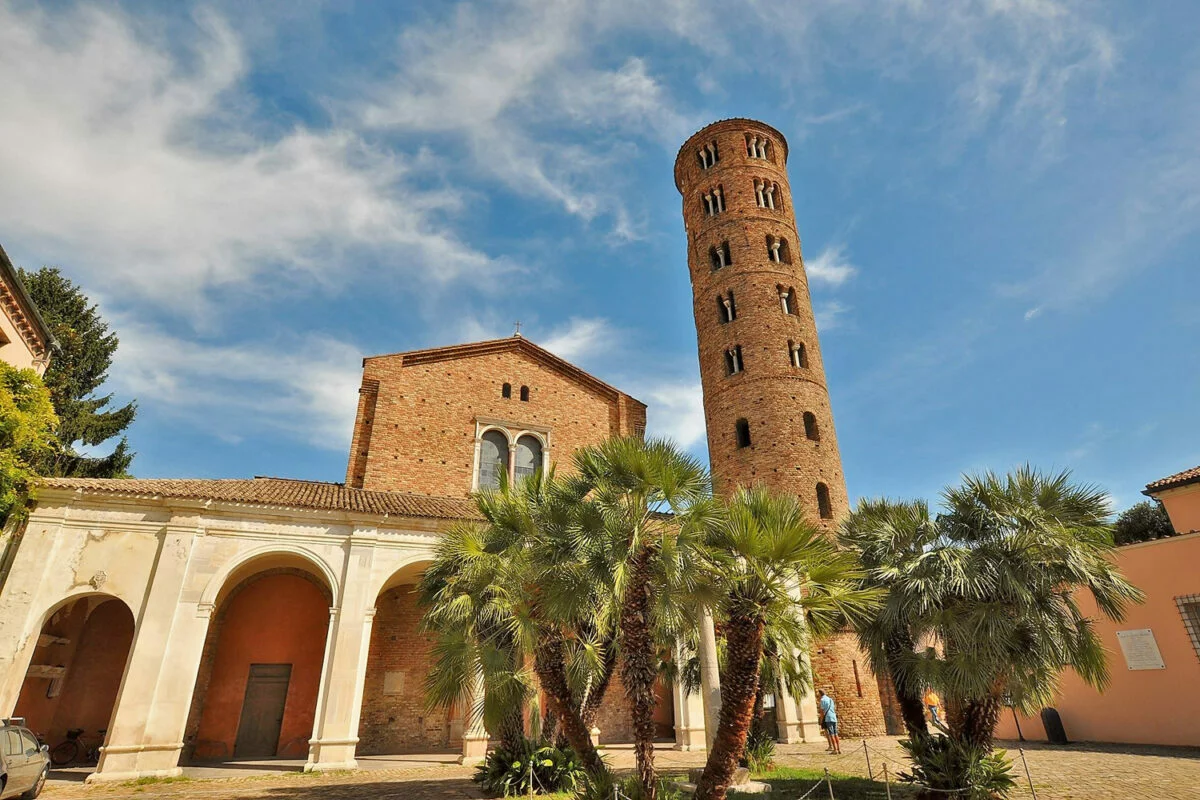 Architect: N/A (commissioned by Theodoric the Great, Ostrogothic King)
Material: Brick
Relative/Absolute Date: 505
Culture: Byzantine
Scale: Early Christian, Byzantine
Current Location: Ravenna, Italy
The Basilica of Sant’Apollinare Nuovo was first constructed under order of Theodoric the Great, king of the Ostrogoths and then ruler of Ravenna, Italy, where this basilica was to be housed. Theodoric and his followers still worshipped Arianism, the subsect of Christianity that alludes to Jesus Christ as a creation of God, rather than a being on the same level of divinity as God. Even at the time, this concept was considered a blasphemous one, and it would be rectified post-Theodoric.
Under Justinian I’s rule, control of the city was wrested away from the Ostrogoths and it was absorbed into the Byzantine Empire in 540 (Ferrell 1981). Justinian I’s bishop, Agnellus, was set on correcting this blasé display of Arianism by stripping any references of it and of Theodoric from the Basilica. In particular, the mosaics that decorated the Basilica were modified to include certain scenes such as the Magi, typically associated with Anti-Arian sentiment, or remove others such as imagery of Theodoric and his household.
The Byzantine Empire sought not to completely destroy any traces of Theodoric’s Arianism, but rather through a series of reforms, transform the Basilica and continue to utilize it. It stands as a symbol of multifaceted religious schism.